College Dance Team Auditions: The Ultimate Prep Checklist
Preparing for college dance team auditions? Get the ultimate 4-year checklist. Learn the required skills (quad pirouettes, aerials), the recruitment timeline, and how to build a winning audition video using DanceLab.
Carrie Leeds
The Timeline: It Starts Earlier Than You Think
Many dancers wait until Senior year to think about college dance. By then, it’s often too late. Recruitment classes for top teams are often 80% filled before the first in-person audition even happens.
Here is the 4-year roadmap to securing your spot.
Freshman & Sophomore Year: The "Research" Phase
Attend Clinics: This is non-negotiable. Colleges host "Combines" or clinics in the Spring and Fall. Go to them. You aren't there to make the team yet; you are there to get on the coach's radar and learn their specific style.
Master the Fight Song: Every school has a specific way they perform their fight song (Sharpness, Pom placement). Learn it now, not the night before auditions.
Junior Year: The "Skills" Phase
The Skills Check: By Junior year, you need to be consistently hitting the "Big 3" skills (see below).
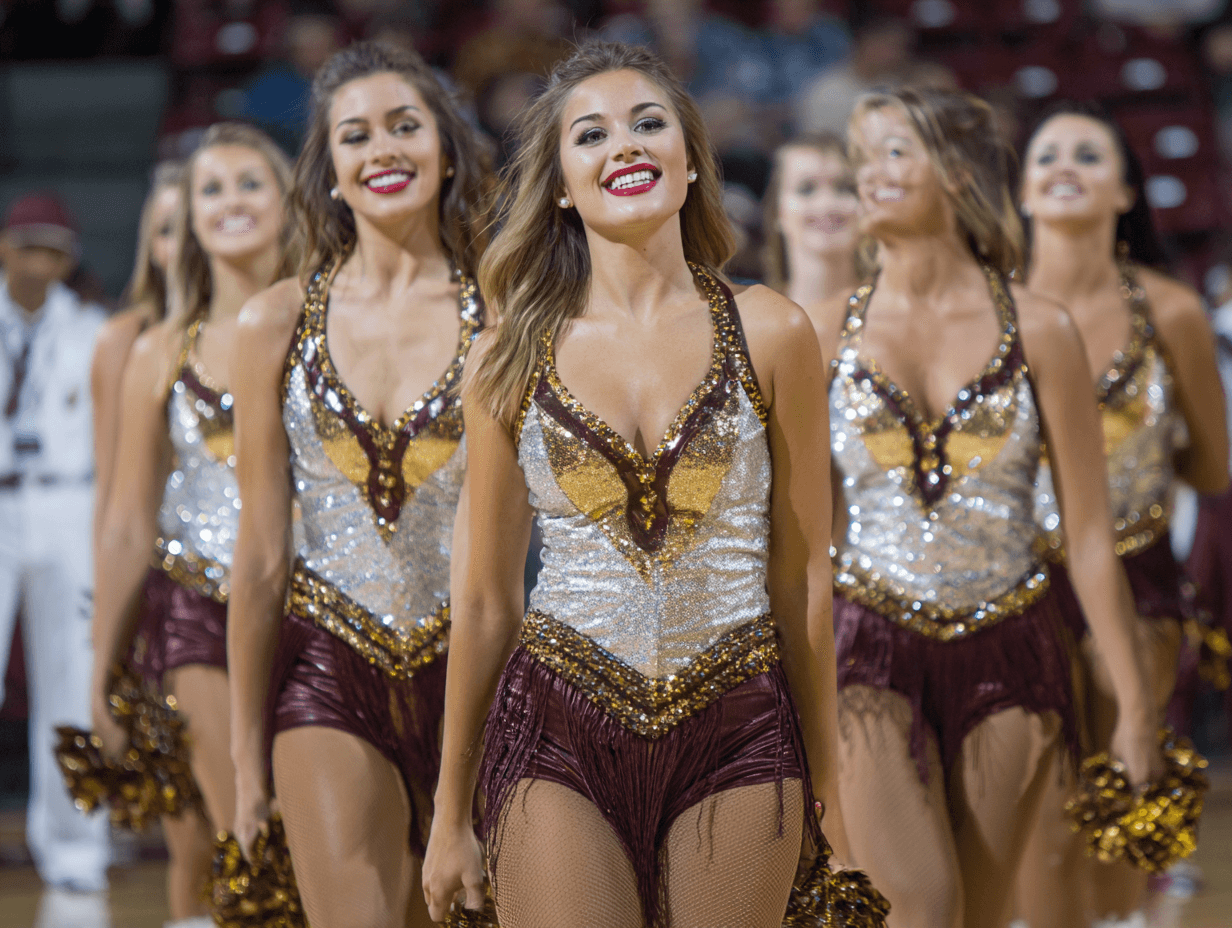
The "Collegiate Look": Start experimenting with the team’s aesthetic. If the team wears red lipstick and low buns, start wearing that to your studio practice to get comfortable with the vibe.
Senior Year: The "Execution" Phase
Summer (Before Senior Year): Film and submit your recruitment video. Most top programs have an early submission deadline of September 1st.
Fall: Apply to the university. You cannot make the team if you don't get into the school.
Winter: Finalize your "Roster Offer" or receive your invitation to the in-person finals.
The Skills: What Actually Matters
Studio dance and College dance are different worlds. You might be an incredible contemporary improviser, but if you can’t hit a clean pom motion or a synchronized turn, you will be cut.
According to 2026 recruitment packets from top universities, here are the non-negotiables:
1. Turns (The Separator)
Pirouettes: A clean Triple is mandatory. A Quad is preferred.
A La Seconde: You need complex sequences that change spots and tempos.
Example: 4 counts of seconds -> Double Pirouette -> 4 counts of seconds -> Float.
2. Aerials & Acro (The Power)
Side Aerials: Must be executed on both right and left sides.
The "Trick" Bag: Kip-ups and Headsprings are standard requirements for Hip Hop rounds.
3. Flexibility & Jumps
The Calypso: Must be performed with a high release and clean chainé preparation.
Toe Touches: Hyperextended jumps where the hips sit above the knees.
The Video: Your First Impression
Your recruitment video is your resume. Coaches watch hundreds of these, so you have about 10 seconds to impress them.
The "Do's" of Submission Videos:
DO wear all black (unless specified otherwise). It shows professionalism and body lines.
DO film in a bright studio. Avoid dark basements or messy bedrooms.
DO include a 30-second introduction. State your name, GPA, and why you want to dance for their specific school.
The "Don'ts":
DON'T wear loose clothing. Coaches need to see your knees and ankles.
DON'T submit a group video where you are hard to find. If you use competition footage, put an arrow on yourself.
How Dancelab Helps You Get Recruited
op coaches love data. They love seeing a dancer who is disciplined, consistent, and self-aware. DanceLab gives you the tools to prove it.
1. Build Your "Data Resume"
Colleges ask for a "Dance Resume". Instead of just listing "Jazz Level 5," use your DanceLab Analytics to provide hard numbers:
"Logged 450 hours of technical training in 2025."
"Completed 52 consecutive weeks of stamina drills." This proves you have the work ethic of a collegiate athlete.
2. The "Video Library"
You need raw footage for your reel. Use the DanceLab Video Library to save your best takes throughout the year. Tag your videos with labels like "Quad Pirouette - Clean" or "Calypso - Best Height" so when it's time to edit your reel, you have your best clips ready to go.
3. Perfect Your Solo
Use the Recording Analysis tool to compare your solo against previous versions. Are your arms sharper today than they were last month? Is your aerial higher? Self-correction is the #1 trait of a coachable dancer.
The stage is waiting. Start preparing now.